Making Waves and Mayhem: FIN's VFX on Send Help
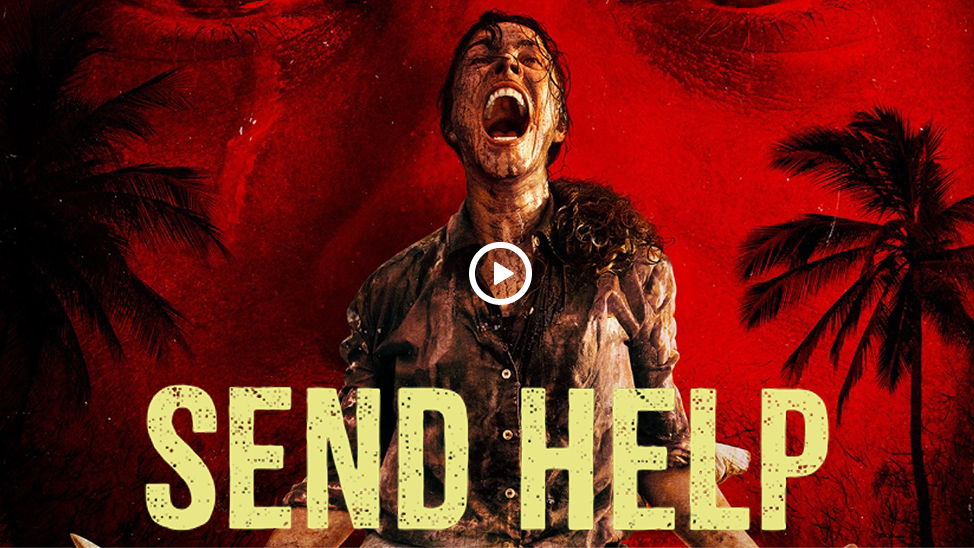
FIN is incredibly proud to have contributed visual effects work to the recently released Send Help, directed by Sam Raimi and starring Rachel McAdams and Dylan O'Brien. Already receiving rave reviews, the film drops audiences into a sun-soaked survival nightmare; equal parts tense, absurd and spectacular, and called for VFX that could deliver scale and chaos without ever stealing the spotlight.
FIN delivered environment, lighting, rendering and compositing work across some of the film's most technically demanding sequences, most notably the plane crash, the life-raft sequence and extensive island set extensions. This included creating the film's epic opening reveal of the island, the first moment the audience sees it in all its brutal, beautiful glory and setting the tone and scale for everything that follows.
One of the most deceptively complex sections of the film was the life-raft sequence. While the final shots sell vast open ocean and total isolation, much of the footage was actually captured in a controlled wave pool in Melbourne, a detail that's completely invisible in the finished film.
Rather than relying on traditional bluescreen workflows, the team tackled a series of unconventional set-extension challenges. Using a combination of complex camera moves, detailed 3D tracking and layout work, CG island and ocean elements were integrated into pre-visualised drone plates, then seamlessly merged with the wave-tank photography. The result is a fully cohesive environment where real water, digital worlds and camera motion all lock together — no visible seams, no giveaways.
Several key shots leaned on alternate camera strategies, including turntable-style setups that gave the team full control over perspective and scale. Reveal shots were a particular highlight, including a standout pull-back moment that exposes the enormity of the environment and became a favourite among the crew both for its technical ambition and the sheer satisfaction of seeing it land on screen.
The island itself required significant asset builds, especially the cliff-face extensions that dominate many of the wide shots. These large-scale digital environments were designed to sit naturally alongside the practical sets, quietly expanding geography and scale without ever calling attention to the VFX.
In one memorable curveball, a planned face-replacement shot proved unworkable using conventional methods. The solution was refreshingly low-tech: the lead actress Rachel McAdams recreated the performance at home, this was filmed by her husband on an iPhone, carefully matching the original action. That footage was then integrated into the final shot, a great example of creative problem-solving and the kind of lateral thinking that keeps productions moving.
The plane-crash sequence was one of FIN's largest contributions to the film. The team built a highly detailed full-CG aircraft, both interior and exterior, giving complete flexibility across the sequence. The asset supported everything from claustrophobic interior chaos to dramatic exterior destruction.
The sequence combined extensive simulation and compositing work, including digital doubles, debris, smoke trails, fire, rain, dust, torn-off doors and flying interior elements like seats and cushions. In several shots, three separate plates were stitched together, requiring meticulous integration across lighting, rendering and compositing to sell the mayhem.
Send Help demanded VFX that could shift effortlessly between spectacle and subtlety, supporting performance and story while delivering scale when it mattered most. FIN is proud to have helped shape a world that feels expansive, dangerous and just a little unhinged.